The RAM Crisis Is Reaching the Automotive Industry: What It Means for Cars, EVs and the Entire Supply Chain
The global RAM crisis is creating new challenges for the automotive industry just as vehicles become more connected, intelligent and electric. Explore how memory shortages are affecting automakers, semiconductor suppliers, EV manufacturers, distributors, repair shops and consumers—and why the shift toward electrification and software-defined vehicles is making automotive memory supply more critical than ever.
Post by: Sawiva | 2025-01-18 07:45:29
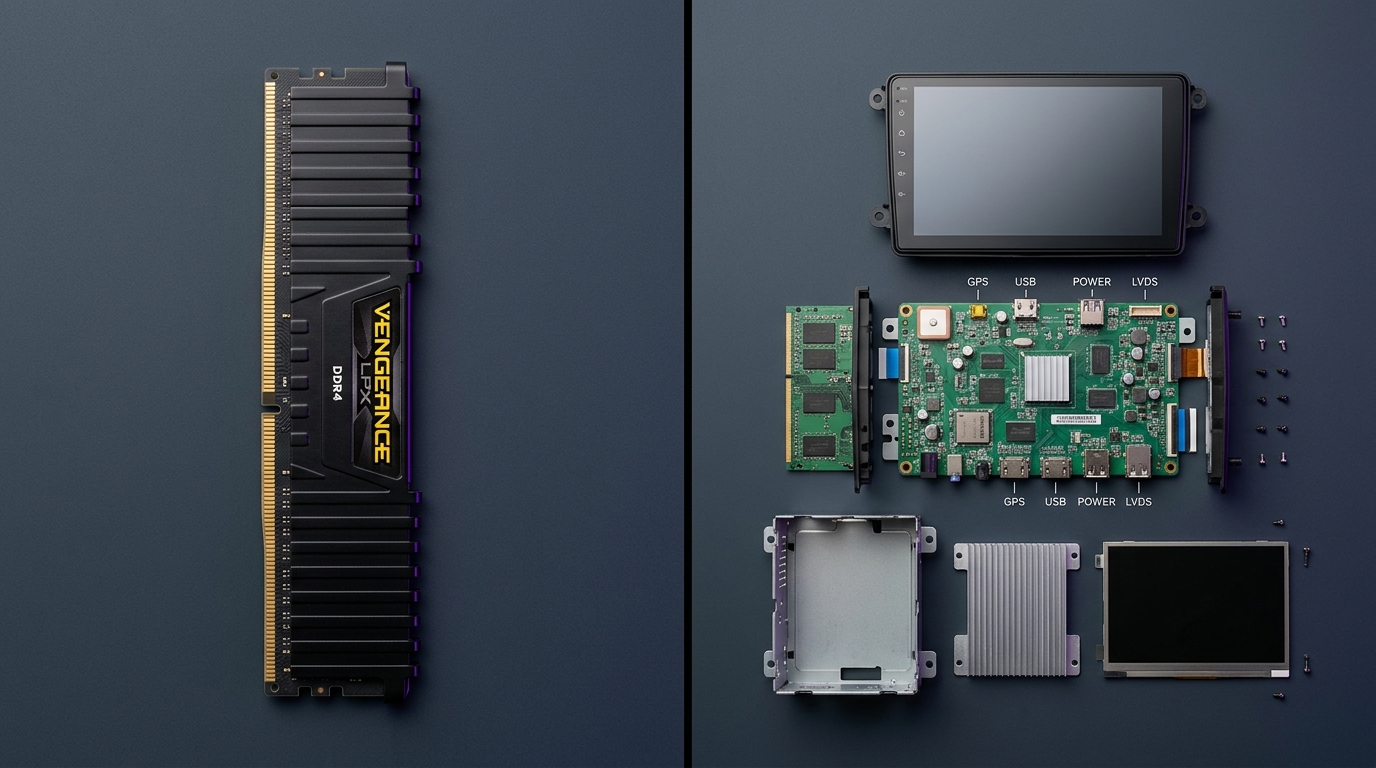
The automotive industry is undergoing one of its biggest technological transformations in decades.
Cars are becoming increasingly connected, intelligent and software-driven. Electric vehicles (EVs) are expanding, advanced driver-assistance systems (ADAS) are becoming more common, and automakers are moving toward centralized computing architectures that make vehicles behave more like powerful computers on wheels.
But this transformation is creating a new vulnerability: memory chips.
The global shortage of DRAM and NAND memory—often referred to as the "RAM crisis"—is being driven largely by enormous demand from artificial intelligence and data centers. Memory manufacturers are allocating significant capacity toward high-value AI applications, putting pressure on supply available to industries such as automotive.
For an industry already dealing with semiconductor dependencies, commodity costs, geopolitical risks and complex global supply chains, this creates another challenge.
And as vehicles become more digital and electrified, the automotive industry may actually become more dependent on memory rather than less.
What Is Causing the RAM Crisis?
The current memory shortage is closely connected to the explosive growth of artificial intelligence.
AI data centers require enormous quantities of high-performance memory, including high-bandwidth memory (HBM), alongside conventional DRAM and NAND storage. Memory manufacturers have strong incentives to prioritize these higher-margin products.
At the same time, expanding semiconductor manufacturing capacity takes years.
The result is a supply-demand imbalance.
Recent industry analysis indicates that automotive customers are already facing tight DRAM supply, with constraints expected to extend beyond 2027.
The problem is particularly important because automotive manufacturers cannot simply substitute any available memory chip. Automotive components have stringent requirements around reliability, temperature tolerance, qualification and long product lifecycles.
This makes the automotive supply chain less flexible than the consumer electronics market.
Why Does RAM Matter in a Car?
When most people think about RAM, they think about computers, smartphones or gaming systems.
But modern vehicles are computers too.
Memory is used across numerous vehicle systems, including:
-
Infotainment systems
-
Digital instrument clusters
-
Navigation
-
Advanced driver-assistance systems
-
Cameras and sensor processing
-
Connectivity systems
-
Telematics
-
Autonomous-driving systems
-
Vehicle control systems
-
Over-the-air software updates
-
AI-powered vehicle functions
Modern software-defined vehicles are particularly memory-intensive because more functionality is being consolidated into powerful computing platforms.
Industry research estimates that automotive memory revenue reached approximately $8.1 billion in 2025, with DRAM and NAND accounting for the majority of identified automotive memory demand.
And the trajectory is moving upward.
Some forecasts suggest that today's vehicles using roughly 16 GB of DRAM for lower-level ADAS could eventually be dwarfed by autonomous vehicles requiring hundreds of gigabytes of memory.
That means the industry's memory requirements could grow dramatically as autonomy and AI become more sophisticated.
Electrification Is Making the Situation More Interesting
The RAM crisis comes at an important moment for the automotive industry.
The industry isn't simply transitioning from petrol and diesel engines to electric motors.
It is simultaneously transitioning from mechanical vehicles to software-defined vehicles.
An EV can contain sophisticated battery-management systems, power electronics, connectivity platforms, digital dashboards, ADAS, thermal-management systems and centralized computing.
In other words, electrification is occurring alongside digitization.
Research from TrendForce indicates that electrified vehicles are particularly exposed to memory price increases because they tend to use higher-capacity memory components.
This creates an interesting paradox:
The cars of the future need fewer traditional mechanical components—but more computing power.
And computing power requires memory.
How the RAM Crisis Could Affect Different Automotive Stakeholders
The impact won't be evenly distributed across the automotive value chain.
1. Automakers and OEMs
For automakers, the biggest concern is cost and supply continuity.
Higher memory prices increase the bill of materials for vehicles. More importantly, an inability to secure enough qualified components can complicate production planning.
Automakers may respond by:
-
Negotiating long-term supply agreements
-
Increasing strategic inventory
-
Designing vehicles around multiple memory suppliers
-
Reducing unnecessary memory requirements
-
Standardizing electronic architectures
-
Redesigning certain electronic control systems
-
Prioritizing higher-margin vehicle models
General Motors, for example, entered into a long-term semiconductor supply agreement with Micron in 2026 covering memory and storage platforms for vehicles. Reuters reported that the agreement is intended to strengthen supply stability amid the memory shortage.
This illustrates a broader shift: memory is becoming a strategic procurement issue rather than simply another component purchased through the normal supply chain.
2. Tier-1 and Tier-2 Suppliers
Automotive suppliers face a similar challenge.
A Tier-1 supplier may manufacture an ADAS system, infotainment platform, ECU or digital cockpit, but that system ultimately depends on semiconductor components.
If memory prices rise or availability falls, suppliers have several choices:
-
Absorb the additional cost
-
Pass the cost to the OEM
-
Redesign the system
-
Search for alternative qualified components
-
Increase inventory
-
Negotiate longer-term semiconductor contracts
The challenge is that automotive qualification processes can make substitution slow and expensive.
A cheaper memory chip isn't necessarily a viable replacement if it hasn't been validated for the vehicle application.
3. Semiconductor Manufacturers
For memory manufacturers, the automotive sector presents both an opportunity and a challenge.
Automotive memory demand is growing because vehicles are becoming more sophisticated.
However, automotive customers compete with extremely powerful buyers in AI and data-center markets.
This creates an economic incentive for semiconductor manufacturers to allocate scarce capacity toward products with higher margins and faster-growing demand.
The automotive industry therefore needs to become more strategic about securing memory.
This could mean:
Long-term contracts → dedicated capacity → automotive-qualified memory → greater supply security
rather than relying primarily on spot-market availability.
4. EV Manufacturers
EV manufacturers could be particularly exposed.
An electric vehicle isn't simply an internal-combustion vehicle with the engine replaced by a battery.
It often comes with a much more electronically integrated architecture.
Battery management, motor control, charging, connectivity, ADAS, infotainment and energy-management systems all rely on electronics.
At the same time, EV manufacturers are increasingly competing on software.
Features such as:
-
Advanced driver assistance
-
Smartphone integration
-
OTA updates
-
Connected services
-
AI-powered assistants
-
Automated parking
-
Intelligent energy management
are becoming part of the vehicle's value proposition.
That makes memory availability increasingly important.
5. Dealerships and Repair Shops
The effects don't necessarily stop at the factory.
As vehicles become more electronic, dealerships and independent repair shops increasingly need to deal with electronic components alongside traditional mechanical parts.
A shortage of certain automotive-grade memory or semiconductor components can contribute to:
-
Longer repair times
-
Higher electronic-module prices
-
Difficulty sourcing replacement ECUs
-
Higher diagnostic costs
-
Increased demand for module repair
-
More interest in refurbished components
This could create a growing market for electronic component repair and refurbishment.
Instead of replacing an entire expensive module, repair specialists may increasingly repair or reprogram individual electronic components where technically and economically feasible.
6. Spare-Parts Distributors
This is where the RAM crisis becomes particularly relevant to the broader automotive aftermarket.
Spare-parts distributors are already dealing with thousands of SKUs, multiple brands, different vehicle generations and fluctuating availability.
As vehicles become more electronic, the aftermarket will increasingly contain parts such as:
-
ECUs
-
ADAS modules
-
Camera modules
-
Infotainment units
-
Digital instrument clusters
-
Battery-management modules
-
Charging modules
-
Sensors
-
Power electronics
-
Communication modules
These parts can be more expensive and more difficult to source than conventional mechanical components.
Consequently, distributors will need better visibility into who has the part, where it is located, what condition it is in and how much it costs.
7. Consumers
Ultimately, consumers may feel the effects through several channels.
Higher vehicle prices
Memory is only one component of a vehicle, but sustained increases in electronic component costs can contribute to higher production costs.
Some industry estimates have suggested semiconductor-related cost increases could be particularly significant for memory-intensive EVs.
More expensive repairs
Electronic modules can be considerably more expensive than traditional mechanical components.
Longer waiting times
If a particular electronic component becomes difficult to source, repairs could take longer.
Feature prioritization
Automakers may also become more selective about which digital features are included as standard equipment.
The Aftermarket Could Become More Important
There is another interesting consequence.
As new vehicles become increasingly expensive and technologically complex, consumers may hold onto their existing vehicles for longer.
That could increase demand for maintenance and replacement parts.
At the same time, older vehicles may become increasingly attractive to buyers who want to avoid the complexity and cost of newer technology.
This creates opportunities for the aftermarket—but also increases the importance of efficient parts sourcing.
The industry will need better ways to connect:
Vehicle owners → repair shops → distributors → wholesalers → manufacturers
with accurate information about availability, compatibility, condition and pricing.
Electrification Changes the Parts Business
The transition to EVs doesn't mean the automotive aftermarket disappears.
It changes.
Traditional vehicles depend heavily on components such as:
-
Engines
-
Transmissions
-
Exhaust systems
-
Fuel systems
-
Belts
-
Pumps
-
Clutches
EVs reduce or eliminate the need for many of these components.
But they introduce or increase demand for:
-
Traction batteries
-
Battery-management systems
-
Electric motors
-
Inverters
-
Charging systems
-
High-voltage components
-
Thermal-management systems
-
Sensors
-
Electronic control modules
-
ADAS components
-
Software and electronic systems
The aftermarket therefore isn't simply shrinking.
It is reorganizing around a new technology mix.
The Rise of the Software-Defined Vehicle
Perhaps the biggest long-term issue is not RAM itself.
It is the transformation of the vehicle into a software platform.
Modern architectures are moving from numerous distributed electronic control units toward domain-based, zonal and centralized computing architectures.
That can simplify some aspects of vehicle design while simultaneously increasing the computing power concentrated in fewer systems.
The vehicle becomes more dependent on:
Compute + Memory + Software + Connectivity + Data
This changes what "a spare part" means.
In the future, a replacement component may not simply be something a mechanic installs.
It may need to be:
-
Physically compatible
-
Electrically compatible
-
Software-compatible
-
Correctly configured
-
Diagnosed
-
Programmed
-
Connected to the vehicle network
This is a major shift for the aftermarket.
What Can the Automotive Industry Do?
There is no single solution to the memory shortage.
Instead, the industry will likely need a combination of strategies.
1. Secure long-term semiconductor agreements
Automakers and Tier-1 suppliers can reduce exposure to spot-market shortages through long-term agreements.
2. Diversify suppliers
Relying heavily on a small number of memory manufacturers creates concentration risk.
3. Design for component flexibility
Future electronic architectures should ideally support multiple qualified memory configurations where possible.
4. Improve inventory visibility
Knowing where inventory exists across the global supply chain becomes increasingly valuable when supply is constrained.
5. Invest in aftermarket technology
As electronic components become more important, platforms that aggregate suppliers and make parts easier to discover can reduce sourcing friction.
6. Develop repair and refurbishment capabilities
Not every electronic failure should necessarily result in replacement of an entire expensive module.
What Does This Mean for the Future of Automotive Parts Sourcing?
The RAM crisis highlights a broader reality:
Automotive supply chains are becoming technology supply chains.
The industry can no longer think only in terms of engines, brake pads, filters and body panels.
Modern vehicles depend on an interconnected ecosystem of mechanical components, electronics, software and semiconductors.
When one part of that ecosystem becomes constrained, the effects can propagate through the entire value chain.
For buyers and distributors, this makes parts discovery, price comparison and supplier visibility increasingly important.
A buyer who can quickly search multiple suppliers, compare prices and identify available inventory has an advantage when supply becomes unpredictable.
The Bigger Picture
The RAM crisis may eventually ease as semiconductor manufacturers expand capacity and supply catches up with demand.
But the underlying lesson will remain.
The automotive industry is becoming increasingly dependent on computing.
At the same time, electrification and software-defined vehicles are increasing the amount of technology inside each vehicle.
That means future automotive supply-chain disruptions may not always begin with steel, rubber or oil.
They could begin with memory, processors, sensors, software or other digital components.
For automakers, suppliers, distributors, repair shops and consumers, resilience will increasingly depend on having visibility across the entire value chain.
The future automotive industry will not be defined only by how efficiently it manufactures vehicles.
It will also be defined by how intelligently it sources, manages and supports the technology inside them.
And as the vehicle becomes a computer on wheels, the ability to find the right component—from a traditional mechanical part to a highly specialized electronic module—will become more important than ever.
The automotive aftermarket is changing. The companies that can make sourcing faster, more transparent and more reliable will be best positioned for what comes next.
The RAM Crisis Is Reaching the Automotive Industry: What It Means for Cars, EVs and the Entire Supply Chain

The Different Oils and Fluids Used in a Car and What They Do
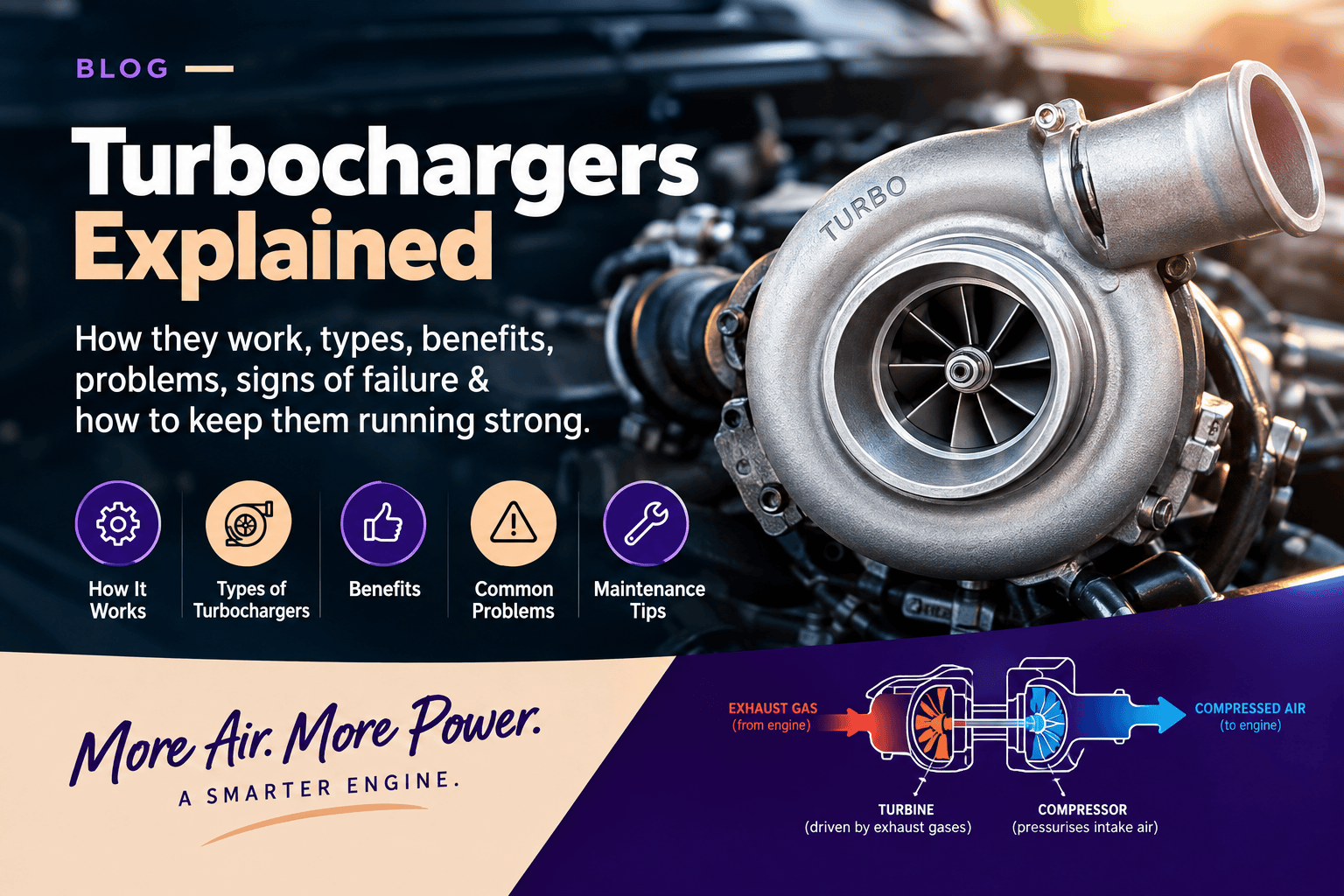
Turbochargers Explained: How They Work, Types, Benefits, Problems & Signs of Failure