Stop, Go, and Save the Planet: The Ultimate Guide to Braking in Electric, Hybrid, and Gas Cars
Explore the world of automotive braking, how it is evolving, the environmental impacts and how it affects you.
Post by: Sawiva | 2025-08-06 12:09:42
Braking Has Changed—And Most Drivers Haven't Noticed
For decades, braking was one of the simplest functions in a car. You pressed the pedal, brake pads clamped onto spinning discs, and the vehicle slowed down. The energy generated by motion disappeared as heat, and that was the end of the story.
Today, that story has changed dramatically.
Modern vehicles—especially hybrids and electric cars—are redefining what it means to "hit the brakes." Braking systems are now capable of recovering energy, reducing pollution, lowering maintenance costs, and even anticipating hazards before drivers react.
What was once a purely mechanical safety feature has become one of the most sophisticated systems in modern transportation.
Whether you drive a traditional gasoline-powered car, a hybrid, or a fully electric vehicle, understanding how your vehicle stops has never been more important.
The Three Ways Modern Cars Brake
Traditional Gasoline Vehicles: Proven and Familiar
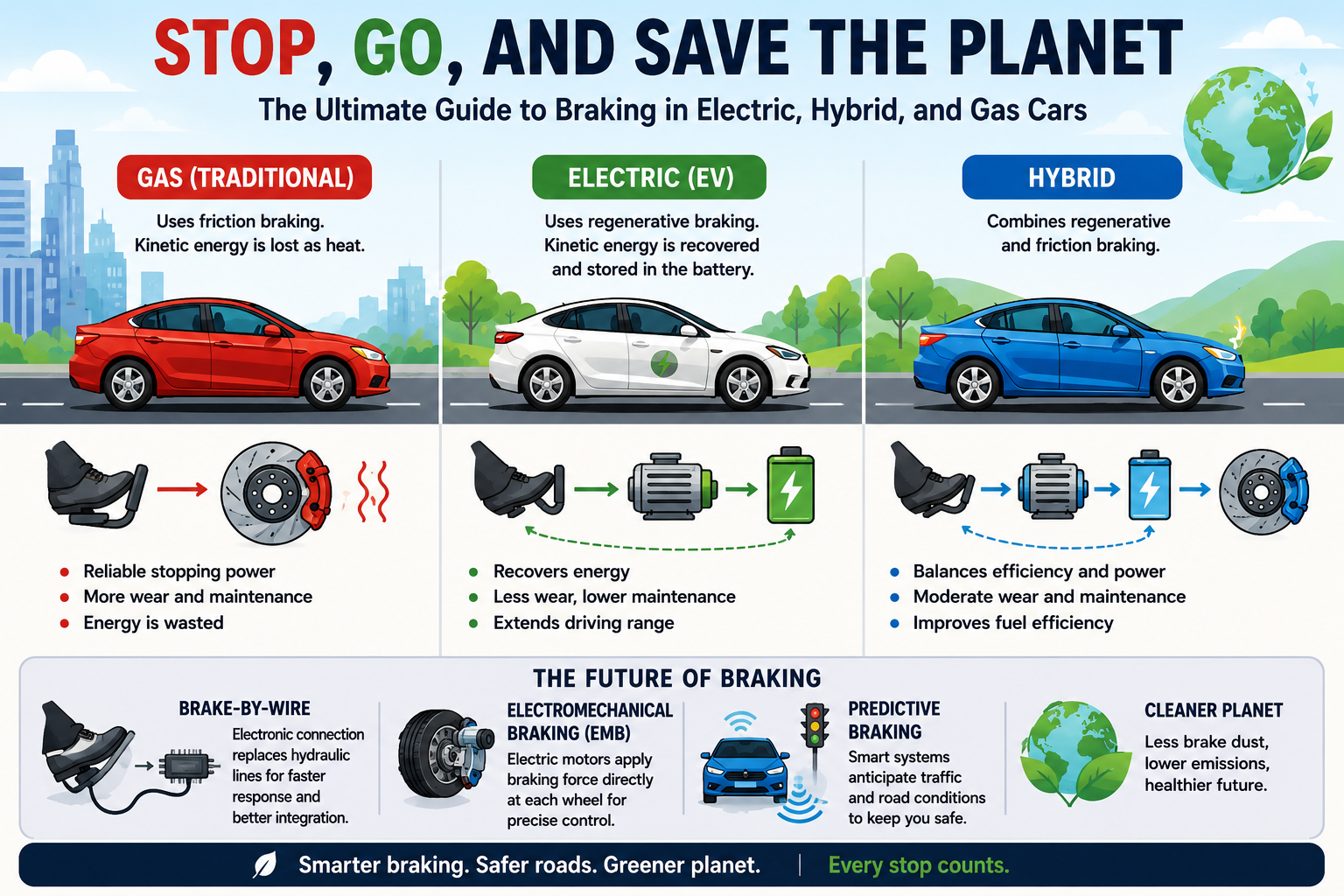
Conventional internal combustion engine (ICE) vehicles rely on friction braking.
When the brake pedal is pressed, hydraulic pressure forces brake pads against rotating discs known as rotors. The resulting friction converts the vehicle's kinetic energy into heat, slowing the car down.
This system has remained largely unchanged for generations—and for good reason.
Advantages
- Highly reliable and predictable in all driving conditions.
- Provides strong stopping power during emergency braking situations.
- Lower manufacturing and repair costs.
- Familiar driving experience with no adjustment period required.
Disadvantages
- All energy generated during braking is lost as heat.
- Brake pads and rotors wear down over time and require replacement.
- Friction creates brake dust, contributing to air pollution.
- Maintenance costs accumulate throughout the vehicle's life.
For many drivers, brake service becomes a recurring expense every few years. Although the technology is dependable, it is not particularly efficient.
Electric Vehicles: Turning Braking into Power
Electric vehicles approach braking from an entirely different perspective.
Instead of simply wasting energy as heat, EVs use regenerative braking to recover a portion of that energy and send it back to the battery.
When the driver eases off the accelerator—or applies the brakes—the electric motor reverses its function. Rather than consuming electricity to propel the car forward, it acts as a generator, converting motion into usable electrical energy.
Traditional friction brakes remain available but are used primarily when stronger stopping power is required.
Advantages
- Recovers energy that would otherwise be wasted.
- Extends driving range by improving efficiency.
- Significantly reduces wear on brake components.
- Lowers long-term maintenance costs.
- Produces substantially less brake dust.
Many EV owners report driving for years without needing major brake service.
Challenges
- One-pedal driving requires an adjustment period.
- Regenerative braking becomes less effective during emergency stops.
- Battery temperature and state of charge can affect performance.
- Sophisticated software is required to coordinate braking systems smoothly.
Despite these limitations, regenerative braking represents one of the most practical efficiency innovations in electric mobility.
Hybrid Vehicles: Bridging Two Worlds
Hybrid vehicles combine the strengths of traditional and electric braking systems.
Under normal conditions, regenerative braking captures energy and improves fuel efficiency. During harder braking events, conventional friction brakes provide additional stopping power.
For many consumers, hybrids offer a comfortable transition toward electrification.
Advantages
- Improved fuel efficiency.
- Reduced brake wear compared to gasoline vehicles.
- Familiar driving characteristics.
- Lower maintenance requirements than traditional cars.
Challenges
- More complex engineering and control systems.
- Higher purchase prices than comparable gasoline vehicles.
- Brake components still require eventual replacement.
Hybrid owners often enjoy the benefits of energy recovery without significantly altering their driving habits.
The Future of Braking Is Already Arriving
Brake-by-Wire Systems
Traditional brakes rely on hydraulic connections between the pedal and braking components.
Brake-by-wire technology replaces much of this mechanical process with electronics.
Sensors detect pedal input and communicate with electronic actuators that apply braking force precisely where needed.
This approach offers several advantages:
- Faster system response.
- Better integration with advanced safety technologies.
- Reduced vehicle weight.
- Improved compatibility with regenerative braking.
As costs decline and reliability improves, brake-by-wire systems are expected to become increasingly common.
Electromechanical Braking
The next evolution may eliminate hydraulic systems entirely.
Electromechanical braking uses electric actuators at each wheel, allowing individual control of braking force.
Potential benefits include:
- Enhanced vehicle stability.
- More precise handling characteristics.
- Elimination of hydraulic fluid maintenance.
- Greater compatibility with autonomous driving technologies.
Although still emerging, this technology could fundamentally reshape automotive braking.
Predictive Braking Technologies
Modern vehicles are becoming increasingly proactive rather than reactive.
Using cameras, radar, sensors, and connected infrastructure, vehicles can anticipate situations requiring intervention.
Examples include:
- Autonomous emergency braking.
- Traffic-aware deceleration systems.
- Weather-adaptive braking assistance.
- Pedestrian detection technologies.
In some cases, these systems can begin preparing the brakes before the driver notices a hazard.
The Environmental Impact We Rarely Discuss
When discussing transportation emissions, exhaust pipes typically receive the most attention.
However, brake dust has emerged as a significant contributor to urban air pollution.
Every application of friction brakes releases microscopic particles into the atmosphere. These particles contribute to particulate matter pollution linked to respiratory and cardiovascular health concerns.
Because electric vehicles rely heavily on regenerative braking, they generate considerably less brake dust.
This advantage has prompted regulators to take notice.
Euro 7: Regulating Brake Emissions
The European Union's Euro 7 regulations represent a major shift in automotive environmental policy.
For the first time, regulations extend beyond tailpipe emissions to include non-exhaust pollutants such as brake particulate matter.
The implications are substantial:
- Manufacturers must develop cleaner braking technologies.
- New materials and coatings will become increasingly important.
- Consumers can expect vehicles designed with broader environmental considerations in mind.
The future of sustainable transportation involves more than electrification—it also requires cleaner supporting technologies.
What Does This Mean Financially?
Initial purchase price is only one part of vehicle ownership.
Braking technology can significantly influence long-term costs.
Traditional Vehicles
- Lower purchase prices.
- More frequent brake maintenance.
- Higher cumulative service costs.
Hybrid Vehicles
- Moderate upfront investment.
- Reduced brake wear.
- Balanced ownership expenses.
Electric Vehicles
- Higher initial costs.
- Minimal brake maintenance.
- Significant savings over time.
Although replacement costs for brake components remain similar across vehicle types, the frequency of those replacements differs dramatically.
For EV owners, brake maintenance intervals can extend well beyond 100,000 miles.
The Driving Experience
Beyond economics and engineering, braking technology changes how vehicles feel on the road.
One-Pedal Driving
Many electric vehicles allow drivers to control acceleration and deceleration primarily through the accelerator pedal.
Advocates appreciate the convenience, especially in heavy traffic.
Critics often prefer the familiar sensation of coasting.
Fortunately, many manufacturers allow drivers to adjust regenerative braking intensity to match personal preferences.
Improved Comfort
Regenerative braking often produces smoother deceleration, reducing abrupt stops and enhancing passenger comfort.
Enhanced Safety
Advanced braking systems provide faster responses and more precise control.
Combined with driver-assistance technologies, they contribute to safer roads for everyone.
Which System Is Right for You?
Traditional Gasoline Vehicles May Suit You If:
- Upfront affordability is your highest priority.
- You prefer proven, familiar technology.
- You primarily drive long highway distances.
- Maintenance costs are not a major concern.
Hybrid Vehicles May Be the Better Choice If:
- You want improved efficiency without major lifestyle changes.
- You're interested in regenerative braking but not ready for a fully electric vehicle.
- You value balance between innovation and familiarity.
Electric Vehicles May Be Ideal If:
- Reducing environmental impact is important to you.
- You prioritize lower long-term operating costs.
- You enjoy adopting emerging technologies.
- Convenient charging access is available.
The Road Ahead
Braking technology reflects the broader transformation taking place across the automotive industry.
What began as a purely mechanical process has evolved into an intelligent system capable of improving efficiency, enhancing safety, reducing pollution, and lowering ownership costs.
The next time you press the brake pedal, remember that modern braking systems do far more than bring a vehicle to a stop.
They recover energy.
They communicate with safety systems.
They minimize environmental impact.
And increasingly, they help shape a cleaner and smarter future for transportation.
The future of mobility isn't just about how fast we can go.
It's also about how intelligently we slow down.
About Sawiva
Sawiva explores the intersection of technology, sustainability, and everyday life. Through practical insights and forward-looking analysis, we aim to make emerging innovations accessible to everyone—from industry professionals to curious consumers.
The Different Oils and Fluids Used in a Car and What They Do
Turbochargers Explained: How They Work, Types, Benefits, Problems & Signs of Failure
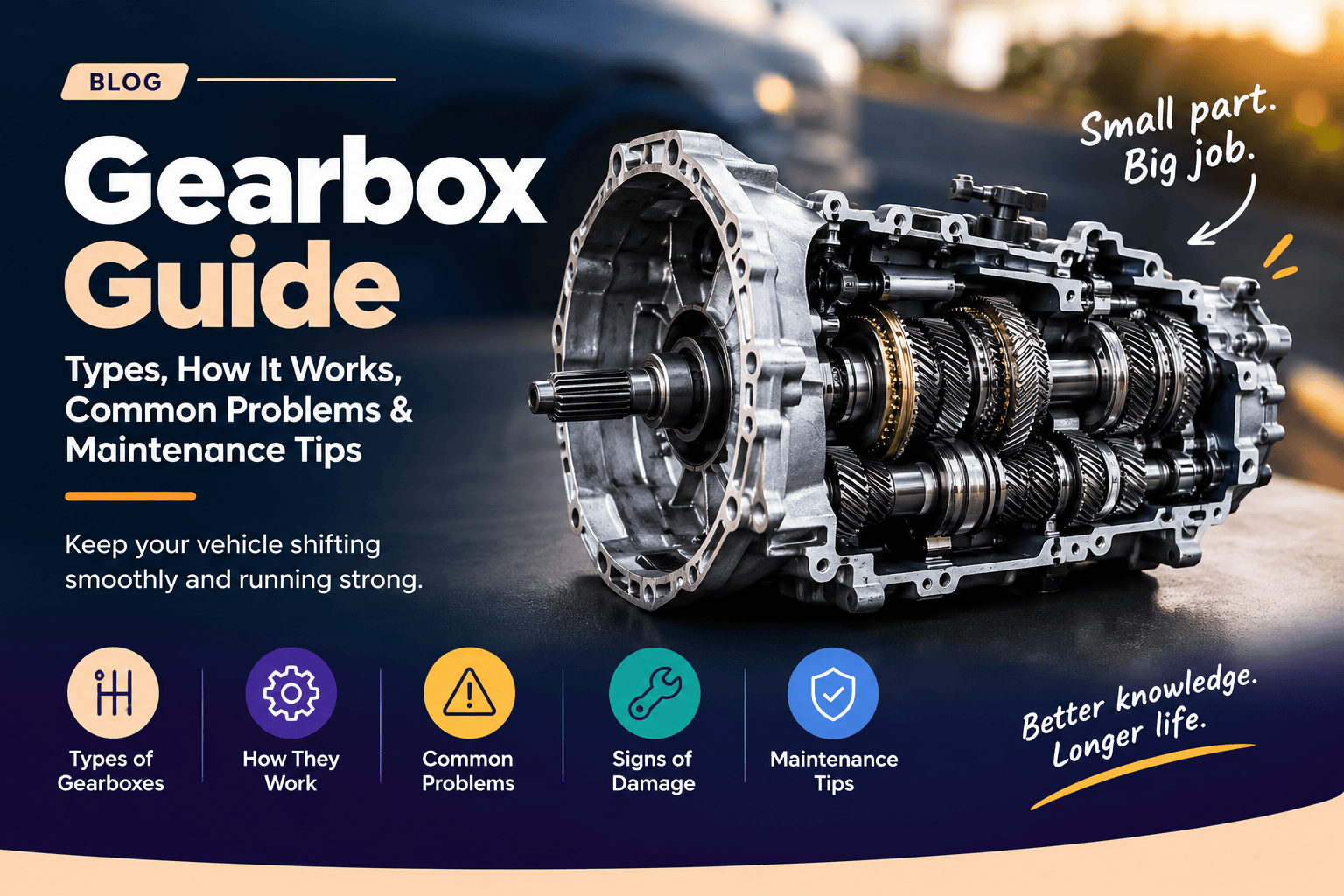
Gearbox Guide: Types, How They Work, Common Problems & Maintenance Tips