The Tiny Sensor That Can Save Your Car Fuel: Understanding the Oxygen Sensor
Learn what an oxygen sensor does, common signs of a faulty O2 sensor, how to maintain it, and when it should be replaced to protect fuel economy and engine performance.
Post by: Sawiva | 2025-03-04 15:08:06
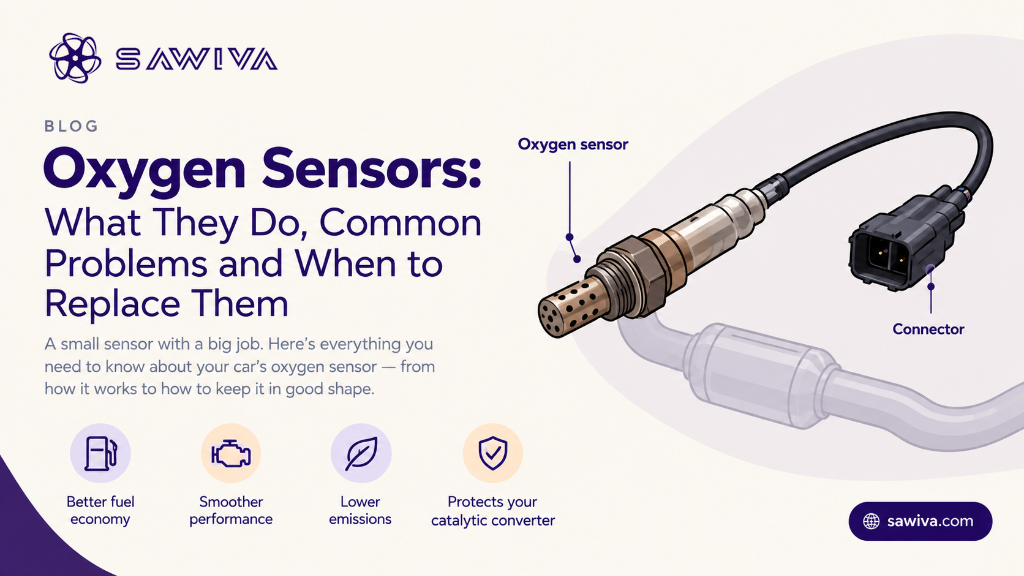
Your car’s engine is constantly trying to answer one question:
“Do I need more fuel, or more air?”
One of the components helping the engine answer that question is a small device sitting in the exhaust system: the oxygen sensor, commonly called the O₂ sensor or lambda sensor.
It may be small, but it has a major influence on fuel economy, emissions, engine performance, and the health of the catalytic converter.
Here's what you need to know.
What Is an Oxygen Sensor?
An oxygen sensor measures the amount of oxygen remaining in the engine's exhaust gases and sends this information to the vehicle's engine control unit (ECU).
The ECU uses this information to adjust the air-fuel mixture being delivered to the engine.
In a conventional petrol engine, the ECU aims for a mixture close to the stoichiometric air-fuel ratio — approximately 14.7 parts air to 1 part fuel under conditions where that ratio is appropriate. (NGKNTK)
Think of the oxygen sensor as the engine's exhaust feedback system.
If the exhaust indicates that the mixture is too rich, the ECU can reduce fuel.
If it indicates that the mixture is too lean, the ECU can increase fuel.
This continuous feedback helps the engine balance performance, fuel consumption, and emissions.
Where Is the Oxygen Sensor Located?
Most modern petrol vehicles can have more than one oxygen sensor.
Upstream oxygen sensor
The upstream sensor is generally positioned before the catalytic converter.
Its primary role is to provide information that helps the ECU control the air-fuel mixture.
Downstream oxygen sensor
A second sensor may be positioned after the catalytic converter.
This sensor primarily helps the vehicle monitor catalytic-converter performance rather than directly controlling the basic air-fuel mixture. (NGK Automotivo)
The exact number and location of sensors depends on the vehicle and engine.
That's why replacing an oxygen sensor should always be done using the correct application and part number for the vehicle rather than simply buying a sensor that looks similar. (NGK Spark Plugs)
What Happens When an Oxygen Sensor Goes Bad?
An oxygen sensor operates in a particularly harsh environment.
It is exposed to high exhaust temperatures, combustion by-products, vibration and contaminants.
Over time, its response can become slower or its readings can become inaccurate.
When that happens, the ECU may receive incorrect information about the air-fuel mixture.
1. Increased fuel consumption
One of the most noticeable symptoms can be worse fuel economy.
A malfunctioning sensor can cause the ECU to make inappropriate fuel adjustments.
DENSO notes that fuel consumption can increase substantially in some malfunctioning-sensor situations, while NGK lists increased fuel consumption as a common consequence of worn oxygen sensors. (DENSO)
If your car suddenly starts consuming noticeably more fuel without a change in driving conditions, the oxygen sensor is one component worth investigating.
2. Check Engine Light
A failing oxygen sensor can trigger the Check Engine Light.
However, there's an important distinction:
A Check Engine Light does not automatically mean the oxygen sensor itself is faulty.
The engine management system can detect abnormal oxygen-sensor signals or fuel-trim conditions caused by other problems.
A diagnostic scan should therefore be performed before replacing the sensor. (Bosch Auto Parts)
3. Rough or unstable idling
A faulty oxygen sensor can contribute to an engine running unevenly.
You may notice:
-
Rough idle
-
Surging
-
Hesitation
-
Uneven acceleration
-
Stalling in some cases
These symptoms aren't unique to oxygen-sensor failure, so proper diagnosis is important. (NGK Plug Pro)
4. Sluggish acceleration
If the ECU isn't receiving accurate information about the air-fuel mixture, the engine may not respond as it normally should.
Drivers may experience:
“I press the accelerator, but the car feels slower than usual.”
Again, this symptom can have many causes, including fuel-delivery, ignition and air-intake problems.
5. Increased emissions
An oxygen sensor plays an important role in maintaining the mixture required for effective catalytic-converter operation.
A faulty sensor can therefore contribute to increased exhaust emissions and potentially cause an emissions inspection failure. (NGK Plug Pro)
6. Damage to the catalytic converter
This is where ignoring an oxygen-sensor problem can become expensive.
A malfunctioning air-fuel control system can contribute to conditions that place additional stress on the catalytic converter.
NTK specifically warns that failing to replace worn oxygen sensors can eventually contribute to catalyst failure. (NGK Plug Pro)
A relatively small sensor can therefore contribute to a much more expensive exhaust-system repair.
Why Do Oxygen Sensors Fail?
Age is only one reason.
Sometimes the sensor is actually the victim of another engine problem.
Common causes of contamination or failure include:
Carbon and soot
Excessive carbon deposits can accumulate on the sensor and slow its response.
A rich-running engine can contribute to excessive soot formation.
Replacing the sensor without addressing the underlying rich-running condition may simply result in the new sensor becoming contaminated again. (NGK Spark Plugs)
Coolant contamination
Coolant entering the combustion or exhaust system can contaminate the sensor.
This can be associated with underlying engine problems that need to be repaired.
Oil contamination
Oil entering the combustion process can also contaminate the sensor.
Silicone contamination
Certain silicone-containing products can damage oxygen sensors.
This is one reason technicians should use products specifically suitable for oxygen-sensor applications around the exhaust system. (NGKNTK)
Fuel additives and unsuitable fuel
Some fuel additives can damage oxygen sensors, according to NTK. (NGKNTK)
Physical or thermal damage
The sensor is exposed to extreme heat and vibration. Wiring, connectors and the sensor itself can be damaged.
Can You Clean an Oxygen Sensor?
This is a common question.
Don't assume that a dirty-looking oxygen sensor should simply be cleaned and reused.
Contamination can affect the sensor's sensing element, and some forms of contamination require replacement rather than cleaning. NTK specifically identifies silicone, excessive carbon and lead contamination as causes requiring sensor replacement. (NGK Spark Plugs)
More importantly, if contamination occurred because the engine is burning oil, running excessively rich, leaking coolant or has another mechanical problem, cleaning or replacing the sensor doesn't fix the root cause.
The underlying problem needs to be diagnosed.
How Can You Make Your Oxygen Sensor Last Longer?
You don't really "service" an oxygen sensor in the same way you service an air filter or engine oil.
Instead, the best maintenance strategy is to protect the sensor from the conditions that shorten its life.
1. Fix engine problems promptly
Don't ignore:
-
Excessive oil consumption
-
Misfires
-
Rich-running conditions
-
Coolant leaks
-
Excessive exhaust smoke
-
Persistent Check Engine Light
These conditions can expose the sensor to contaminants and abnormal exhaust conditions.
2. Use the correct fuel
Use fuel appropriate for your vehicle and avoid questionable aftermarket additives unless they're specifically recommended for your application.
Some additives can contaminate oxygen sensors. (NGKNTK)
3. Don't use unsuitable silicone products
Silicone contamination is a known cause of oxygen-sensor failure.
When working around the sensor, exhaust system or engine-management components, use products that are explicitly compatible with oxygen sensors. (NGK Spark Plugs)
4. Inspect the wiring and connector
The sensor itself isn't the only thing that can fail.
Heat, vibration, corrosion and physical damage can affect the wiring or connector.
A diagnostic check should therefore consider the entire sensor circuit, not just the sensor.
5. Diagnose before replacing
This is perhaps the most important maintenance rule.
Don't replace an oxygen sensor simply because the Check Engine Light is on.
A diagnostic scan combined with live-data analysis and inspection can help determine whether the sensor is actually malfunctioning or whether another engine problem is producing an abnormal reading.
How Often Should an Oxygen Sensor Be Replaced?
There isn't one universal answer.
This is one area where vehicle-specific maintenance information matters.
Some manufacturer guidance gives inspection intervals rather than a mandatory replacement interval.
For example, NTK says its sensors can have service lives in the 80,000–150,000 km range, while recommending inspection at regular service intervals. (NGK Spark Plugs)
An older NTK technical bulletin provides guideline ranges of approximately:
| Sensor type | Guideline |
|---|---|
| Unheated oxygen sensor | 30,000–50,000 km |
| Heated oxygen sensor | 70,000–100,000 km |
The same bulletin stresses that actual life depends on driving conditions, maintenance, fuel and other factors. (NGK Plug Pro)
NTK's Japanese technical information gives another general check point of 5 years or 80,000 km, again noting that actual conditions vary. (NGK Spark Plugs)
So rather than saying:
“Replace your oxygen sensor every 100,000 km.”
A better rule is:
Follow your vehicle manufacturer's maintenance schedule, monitor for symptoms, and have the sensor tested when appropriate.
Some sensors can last well beyond 100,000 km, while others may fail considerably earlier because of contamination or underlying engine problems.
Should You Replace It If the Car Still Runs Fine?
Not necessarily.
A car can continue running even when an oxygen sensor is becoming slow or inaccurate.
That's one reason regular diagnostic checks can be useful.
A sensor doesn't have to completely fail before it starts affecting fuel control and emissions.
NTK recommends checking oxygen sensors during regular servicing, while other manufacturers provide vehicle-specific inspection or replacement guidance. (NGK Spark Plugs)
Oxygen Sensor vs. Air-Fuel Ratio Sensor
There's another important detail for modern vehicles.
Not every vehicle uses the same type of exhaust sensor.
Some modern engines use wideband air-fuel ratio sensors, which can provide much more precise information about the mixture than traditional narrowband oxygen sensors.
So when ordering a replacement, don't simply ask for:
“An oxygen sensor for a Toyota.”
Provide the:
-
Make
-
Model
-
Year
-
Engine
-
VIN where necessary
-
Existing sensor position
-
Original part number where available
Using the correct application is essential because oxygen sensors are not universally interchangeable. (NGK Spark Plugs)
The Bottom Line
The oxygen sensor may be hidden underneath your car, but it has an important job.
It helps the ECU understand what's happening in the exhaust and allows the engine management system to adjust fuel delivery appropriately.
A failing sensor can contribute to:
Poor fuel economy → rough running → increased emissions → potential catalytic-converter problems.
But remember:
A Check Engine Light doesn't automatically mean you need a new oxygen sensor.
Diagnose the problem first.
And if a sensor has failed because of oil, coolant, excessive fuel, carbon or another engine problem, fix the cause, not just the sensor.
Quick checklist for drivers
Watch for:
-
Check Engine Light
-
Increased fuel consumption
-
Rough idle
-
Hesitation
-
Sluggish acceleration
-
Increased exhaust emissions
To protect the sensor:
-
Maintain the engine properly
-
Address misfires and oil/coolant problems
-
Use appropriate fuel
-
Avoid unsuitable additives
-
Protect the sensor wiring
-
Use the correct replacement part
-
Diagnose before replacing
Your oxygen sensor doesn't need much attention when everything is working properly—but when it starts sending the wrong information, your engine can quickly start paying the price.
Sources
This article is based primarily on technical information from NTK/NGK and DENSO, including their guidance on oxygen-sensor operation, contamination, symptoms and service life. (NGKNTK)
The Tiny Sensor That Can Save Your Car Fuel: Understanding the Oxygen Sensor
Car Radiators Explained: How They Work, Common Problems & When to Replace One

The Mechanic Is Changing: How Electrification Is Reshaping Automotive Repair