Car Radiators Explained: How They Work, Common Problems & When to Replace One
Learn how car radiators work, common radiator problems, warning signs, maintenance tips, and how to choose the right radiator for your vehicle.
Post by: Sawiva | 2025-08-06 12:09:42
Car Radiators Explained: How They Work, Common Problems & When to Replace One
Your engine can reach extremely high temperatures within minutes of starting. So what keeps all that heat under control?
Meet the radiator.
Often overlooked until something goes wrong, the radiator is one of the most important components in a vehicle's cooling system. It helps regulate engine temperature by removing excess heat from the coolant before sending it back through the engine.
A problem with the radiator can turn a normal drive into an overheating warning—and potentially an expensive engine repair.
So, how exactly does a radiator work, what causes radiators to fail, and how do you know when it's time for a replacement?
What Does a Car Radiator Do?
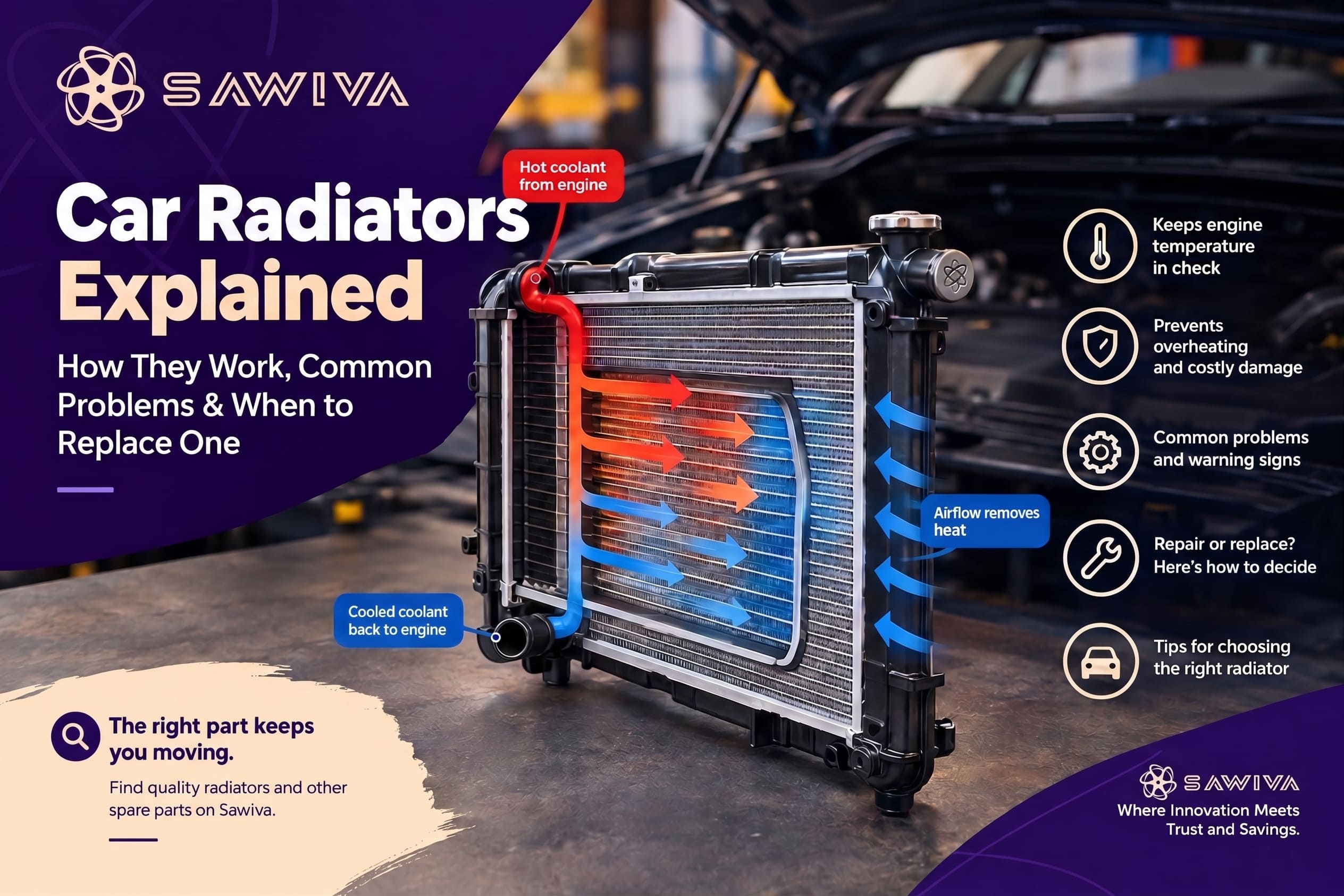
The radiator's main job is to remove heat from the engine coolant.
As an engine operates, combustion generates significant amounts of heat. Coolant circulates through passages in and around the engine, absorbing this heat. The hot coolant then travels to the radiator.
Inside the radiator, the coolant passes through a series of narrow tubes surrounded by cooling fins. Air flowing through these fins carries heat away from the coolant.
The cooled coolant then returns to the engine, where the process starts again.
In simple terms:
Engine → Hot coolant → Radiator → Heat released → Cooled coolant → Engine
This continuous cycle helps keep the engine within its intended operating temperature.
Why Is Engine Temperature So Important?
An engine needs to operate within a particular temperature range.
Too cold, and the engine may not operate efficiently. Too hot, and components can begin to suffer damage.
An overheating engine can potentially lead to problems such as:
-
Warped cylinder heads
-
Head-gasket failure
-
Damaged pistons and valves
-
Engine oil breakdown
-
Severe engine damage
This is why a radiator is much more than a container for coolant. It is a critical part of the system that protects the engine from excessive heat.
What Are the Main Parts of a Radiator?
Although radiator designs differ between vehicles, most contain several key components.
1. Radiator Core
The core contains the tubes and fins through which heat is transferred. It is essentially the working section of the radiator.
2. Tubes
Hot coolant flows through the radiator tubes. These provide a large surface area for heat to be transferred away from the coolant.
3. Cooling Fins
The fins surround the tubes and increase the surface area exposed to airflow.
More effective airflow and surface area mean better heat transfer.
4. Radiator Tanks
Tanks distribute coolant into and out of the radiator core. Depending on the design, they may be made from plastic, aluminum, or other materials.
5. Radiator Cap
The radiator cap helps maintain pressure within the cooling system. Proper system pressure increases the boiling point of the coolant and helps the cooling system operate efficiently.
What Causes a Radiator to Fail?
Radiators don't necessarily fail overnight. In many cases, deterioration happens gradually.
Corrosion
Over time, corrosion can damage the radiator's tubes, fins, and tanks. Poor-quality or incorrect coolant can contribute to corrosion and deposits within the cooling system.
Physical Damage
Road debris, stones, accidents, and other impacts can damage radiator fins or puncture the radiator.
This can be particularly noticeable on vehicles that regularly drive on rough or debris-filled roads.
Blockages
Deposits, corrosion products, or contaminated coolant can restrict coolant flow through the radiator.
A radiator may look fine externally while still having restricted internal passages.
Cracked Tanks
Many modern radiators use plastic tanks. Heat cycles and age can eventually make the plastic brittle, increasing the risk of cracks and leaks.
Damaged Fins
Bent or damaged fins can restrict airflow and reduce the radiator's ability to transfer heat.
How Do You Know Your Radiator May Be Failing?
A radiator problem doesn't always announce itself with a dramatic cloud of steam.
Some warning signs can be much more subtle.
Look out for:
🌡️ Rising engine temperature
If the temperature gauge consistently runs higher than normal, the cooling system should be inspected.
💧 Coolant leaks
Puddles or visible coolant around the radiator can indicate a leak.
🔥 Engine overheating
Repeated overheating is a serious warning sign and should not be ignored.
💨 Steam from the engine bay
Steam can indicate that coolant is escaping or that the engine is operating at excessive temperature.
🟢 Low coolant levels
If coolant repeatedly disappears without an obvious explanation, there may be a leak somewhere in the cooling system.
🚗 Overheating in traffic
A vehicle that overheats primarily when stationary or moving slowly may have an issue involving airflow, the cooling fan, or another component of the cooling system.
However, here's an important point:
Not every overheating problem is caused by the radiator.
The thermostat, water pump, radiator fan, hoses, radiator cap, coolant, and even the head gasket can cause similar symptoms.
Proper diagnosis matters before replacing a part.
Can a Radiator Be Repaired?
Sometimes.
Small leaks or localized damage may be repairable depending on the radiator's construction and condition.
However, extensive corrosion, multiple leaks, damaged tanks, severe blockage, or significant structural damage may make replacement the better option.
For older radiators, repair can sometimes be practical. For newer vehicles, replacement may be more appropriate depending on the part and availability.
Choosing the Right Replacement Radiator
This is where spare-parts sourcing becomes particularly important.
A radiator can look almost identical to another radiator and still be the wrong part for a particular vehicle.
When sourcing a radiator, consider:
-
Vehicle make
-
Model
-
Model year
-
Engine size and engine code
-
Transmission type
-
Radiator dimensions
-
Hose connections
-
Mounting points
-
Cooling requirements
-
OEM or aftermarket specification
-
OEM/MPN part number
The part number can be particularly useful when sourcing a replacement.
Rather than relying solely on "Toyota radiator" or "BMW radiator," checking the original part number and compatible cross-references can help reduce the risk of ordering an incorrect component.
Radiator Maintenance: A Little Attention Goes a Long Way
Your radiator is designed to work hard, but it still needs a healthy cooling system around it.
Some basic maintenance practices include:
-
Check coolant levels regularly.
-
Use the coolant recommended for the vehicle.
-
Inspect for visible leaks.
-
Keep the radiator's external fins reasonably clean.
-
Inspect hoses for cracks or deterioration.
-
Pay attention to unusual temperature readings.
-
Investigate repeated coolant loss.
-
Never ignore repeated overheating.
And if your temperature gauge suddenly enters the danger zone, don't simply keep driving and hope it comes back down.
An overheating problem that could have been solved with a cooling-system repair can become an engine rebuild if ignored.
Radiators and the Spare-Parts Market
For mechanics, garages, retailers, and vehicle owners, finding the right radiator isn't simply about finding something that fits.
The right part needs to match the vehicle's application and cooling requirements.
This is why accurate vehicle information, OEM numbers, cross-references, supplier information, and product specifications are important when sourcing cooling-system components.
Whether you're replacing a radiator because of a leak, corrosion, accident damage, or age, taking the time to identify the correct part can save both time and money.
Final Thoughts
The radiator may not be the most noticeable component under your hood, but it plays a major role in keeping your engine alive.
By continuously transferring heat away from the coolant, it helps your engine maintain a safe operating temperature and prevents excessive heat from turning into expensive damage.
So the next time you see that temperature gauge climbing higher than usual, don't ignore it.
Your radiator—and your engine—may be trying to tell you something.
Looking for automotive spare parts? Search for the part you need on Sawiva and connect with reliable suppliers.
Sawiva — Where Innovation Meets Trust and Savings.
Car Radiators Explained: How They Work, Common Problems & When to Replace One
The Mechanic Is Changing: How Electrification Is Reshaping Automotive Repair

The RAM Crisis Is Reaching the Automotive Industry: What It Means for Cars, EVs and the Entire Supply Chain